 Elizabeth Carpenter
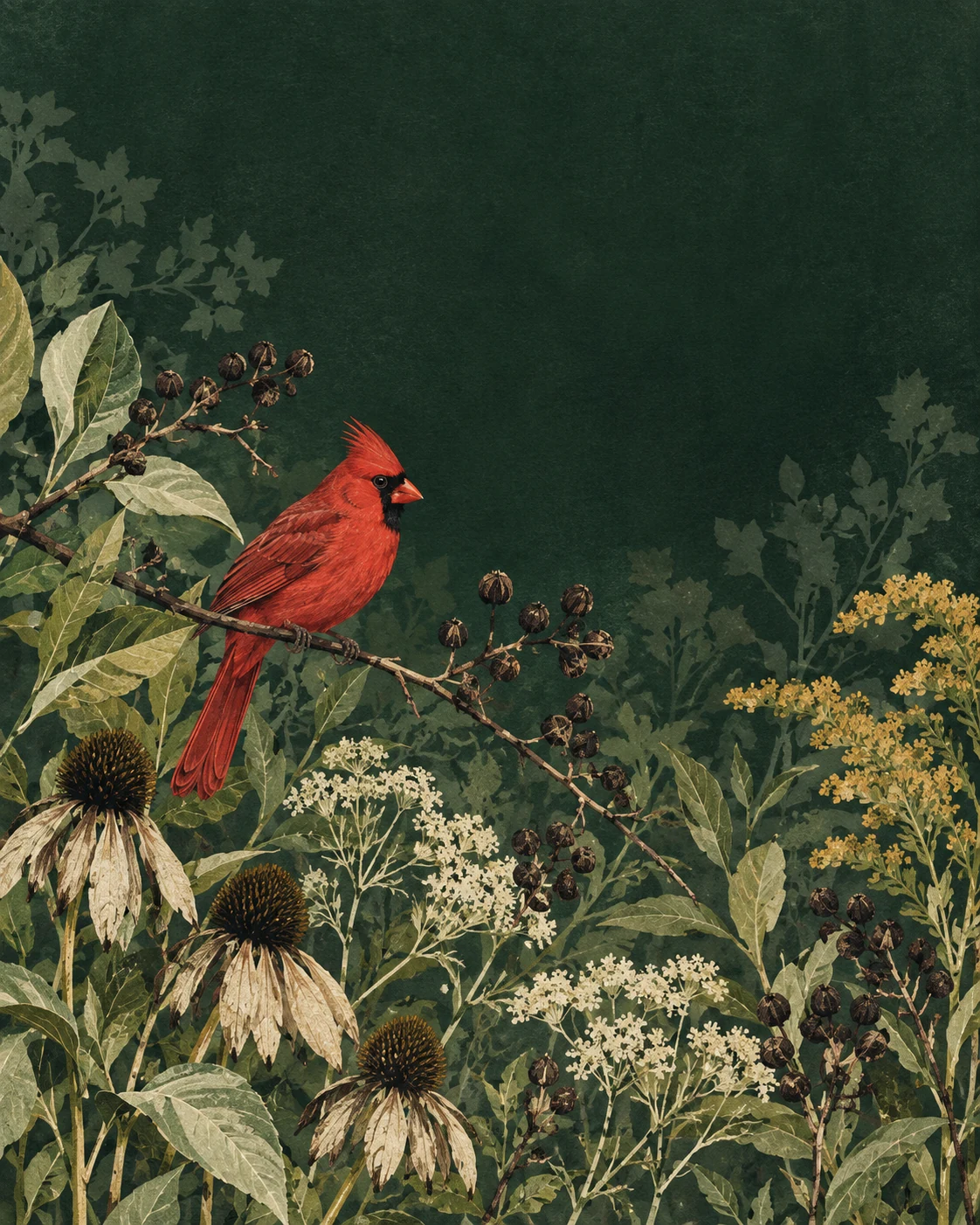
A little closer
to the wild.
Backyard Bird Haven
Backyard Bird Haven makes nature approachable through birding education, seasonal stories, and invitations to participate. I developed the audience strategy, editorial voice, and recurring formats that connect a moment of curiosity with a practical next step.
My role: Creator, content strategy, editorial planning, and creative direction.
Read the live Backyard Bird Haven site ↗
Explore @backyardbirdhavenTHE BRAND IN PRACTICE
Small wonders.
A whole brand.
A warm, curious voice travels from a first discovery to a daily ritual. Six creative applications bring the editorial strategy to life.
Portfolio concepts · New creative extensions of the existing content strategy, developed with AI-assisted artwork.
backyard
bird haven.
There’s a whole world
right outside.
A recognizable world.
Expressive serif headlines, clear everyday language, and tactile bird illustrations. Curious, welcoming, quietly joyful.
Aa Georgia + DM Sans
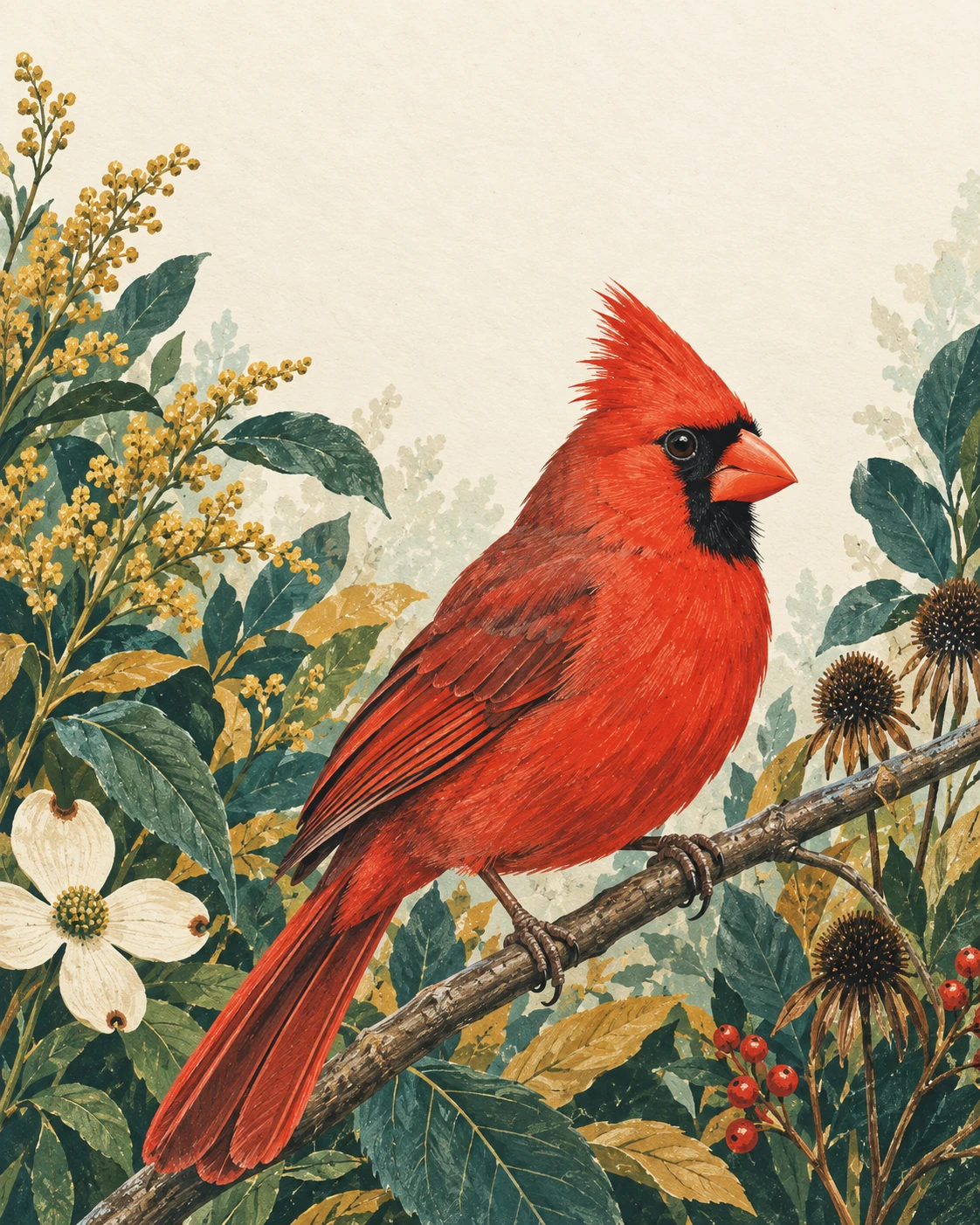
Meet your morning regulars
A three-slide story moves from discovery to observation, then gives the audience a reason to return.
Some birds
change
everything.
What’s your
spark bird?
The bird that started it all
A personal question makes space for shared stories and turns passive viewing into a conversation.
field notes.
A little wild in your inbox.
THE SEPTEMBER EDIT
Less scroll.
More sky.
September is a good time to take the long way to the mailbox. Look up. Listen for a call you don’t recognize. Let the next small discovery interrupt your day.
Pick one patch of green. Notice one color, one sound, and one movement. Write a sentence about what you saw. A name can come later.
Inside this month’s field notes
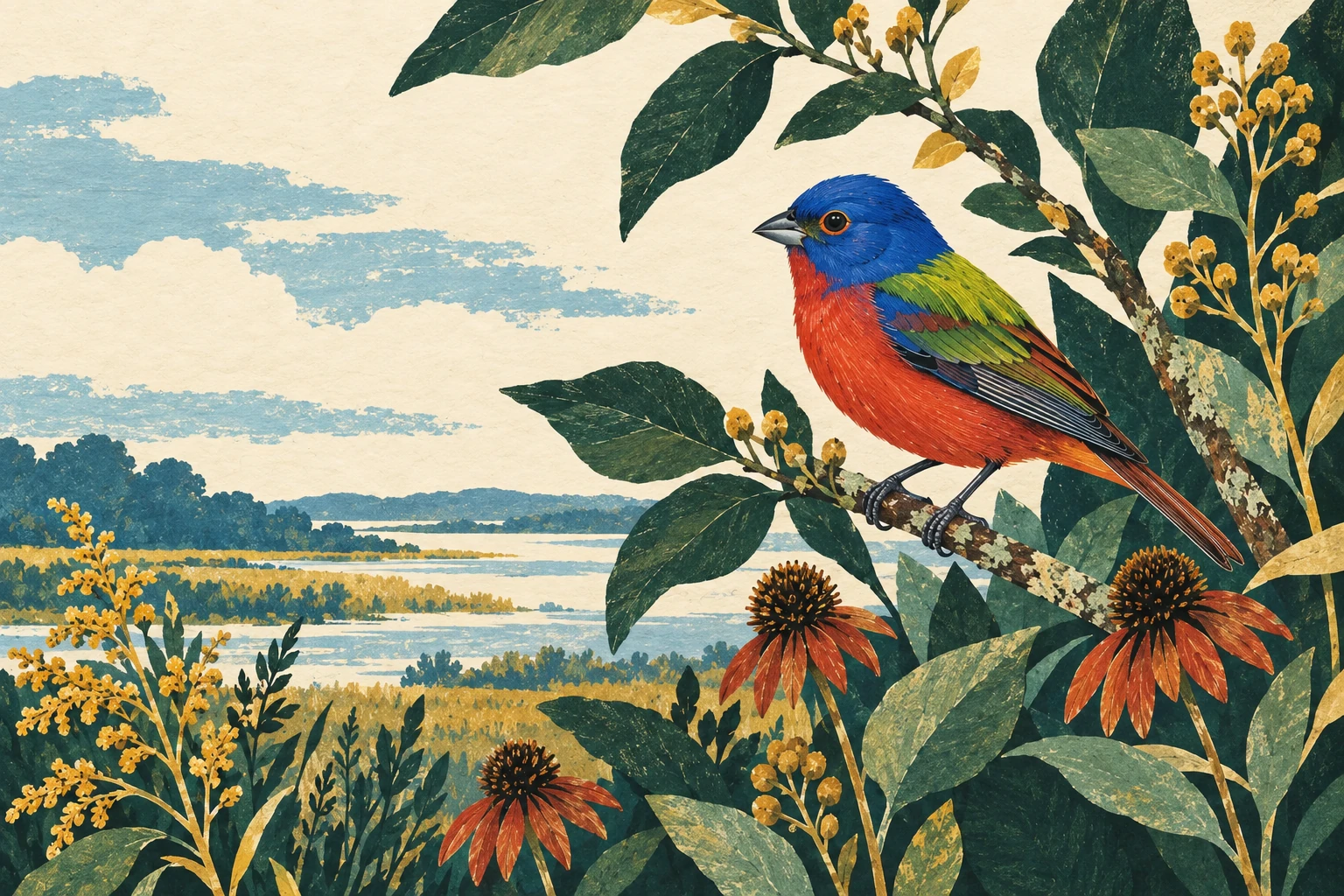
A bird with its own color theory.
The male Painted Bunting pairs a blue head with a green back and red underparts. It’s a favorite of mine, and the inspiration for this issue’s illustration. [1]
Make room for the night shift.
Many migrating birds travel at night. Bright artificial light can disorient them. Turn off unnecessary decorative lights and close the curtains when indoor lights are on. [2]
Start with something rooted here.
Native plants help support birds through the seasons. Find options suited to your area before choosing what to grow. A thoughtful next planting is a place to begin. [3]
WORKS CITED / FURTHER READING
See you outside,
Elizabeth
A ritual worth opening
A September editorial concept pairs a distinctive illustrated cover with a personal opening, three recurring sections, one practical action, and linked sources.
Seven days.
A little more wild.
A week of small invitations to notice what’s already around you.
-
01Find your front-row seat.
Choose a window, step, or garden corner.
-
02Listen before you look.
Notice the sounds around your spot.
-
03Follow one visitor.
Watch where a bird pauses next.
-
04Collect a color.
Spot a shade you missed yesterday.
-
05Make a tiny field note.
A sentence or a sketch is enough.
-
06Bring someone along.
Share your favorite place to pause.
-
07Tell your small story.
What made you stop and look?
The Little Lookout
Seven approachable prompts create a complete week of content and a repeatable participation format.
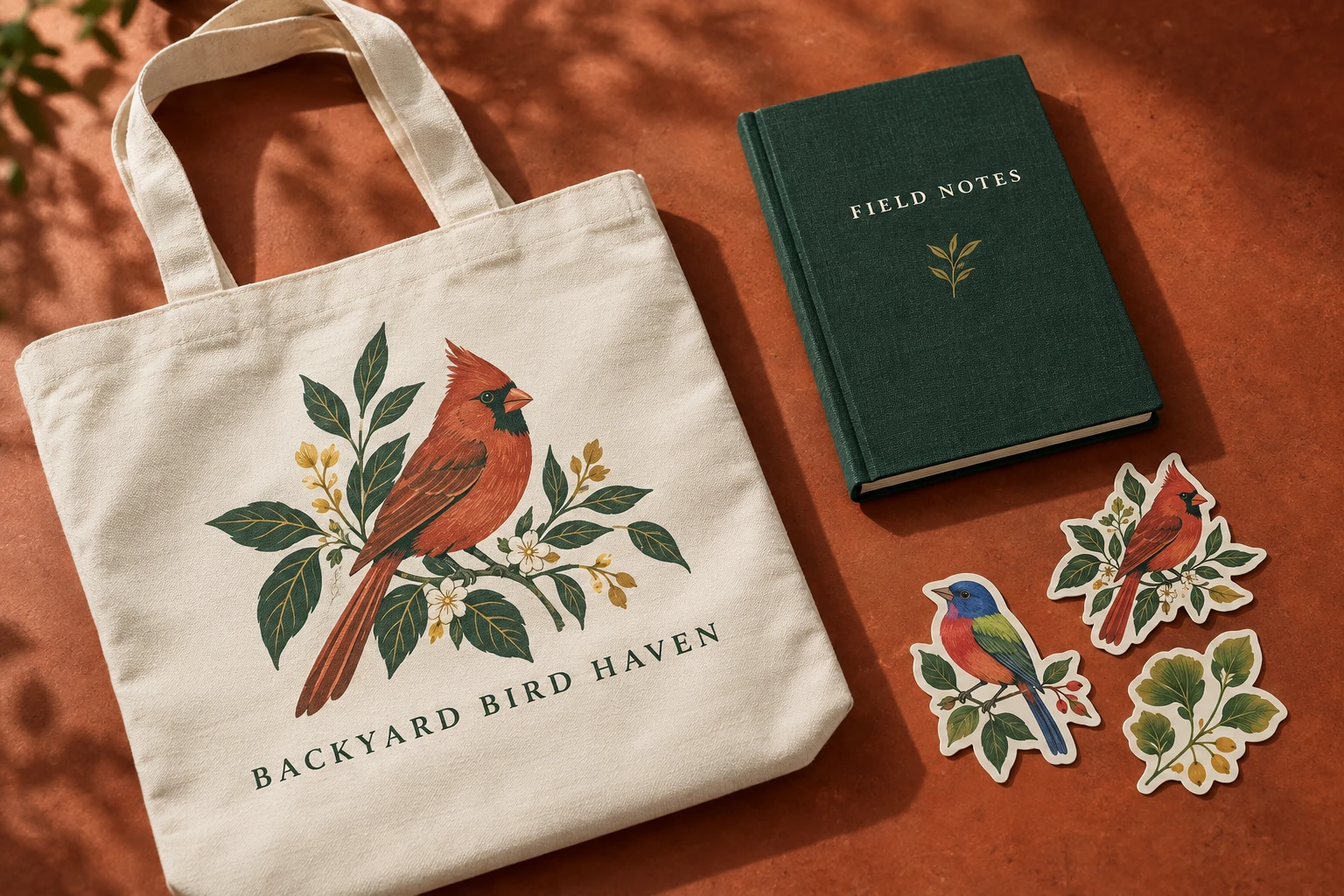
For the everyday
bird person.
A field journal, an illustrated tote, and collectible stickers carry the same visual language into everyday objects. Merchandise mockups explore the brand’s potential.
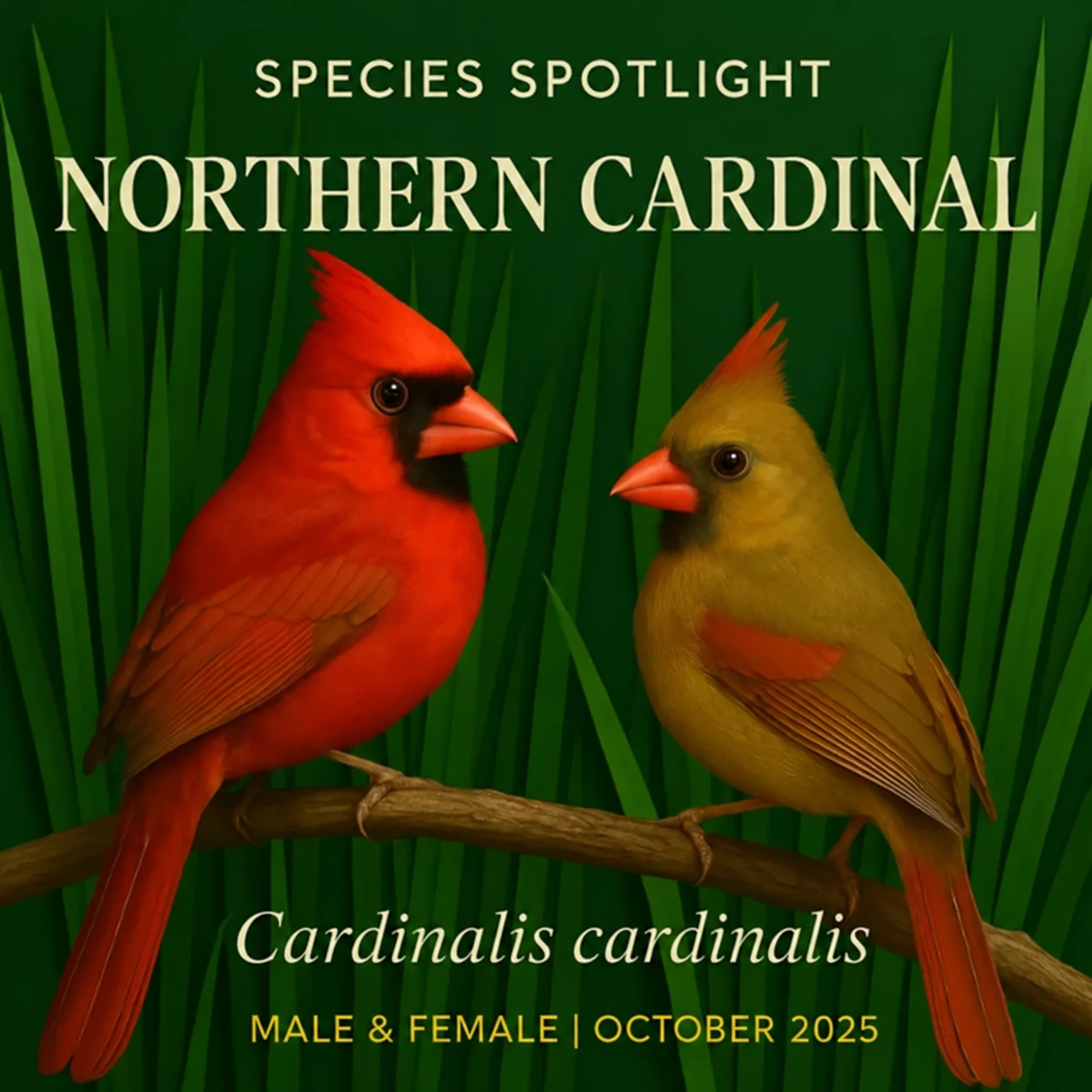
FROM THE BRAND ARCHIVE / OCTOBER 2025
A recognizable editorial series.
This Species Spotlight cover pairs a clear topic with a vivid male-and-female comparison. It shows the brand’s earlier educational direction alongside the new September 2026 Field Notes treatment.
Canva cover reproduced as a design sample, with the scientific-name spelling corrected. Publication status and audience results are not asserted.
PROPOSED CAMPAIGN / MEASUREMENT APPROACH
From a first discovery to a useful next step.
This proposed pilot connects beginner-friendly stories with practical participation. It is a planning sample, not a completed campaign or a fundraising result.
Audience & objective
Start with people curious about nearby birds who may not identify as birders. Invite one achievable action, then give them a reason to return.
Editorial sequence
Introduce a familiar bird in a social post, deepen the story in Field Notes, and offer one relevant action or a link to a local birding community.
Trust & accessibility
Check species, seasonal claims, and advice against authoritative sources. Label illustrations, use descriptive alternative text, and avoid assuming readers have a yard, equipment, or prior birding knowledge.
Learning & iteration
Establish a baseline before setting targets. Compare which stories lead readers to a useful resource, then use those findings to shape the next editorial cycle.
| Question | Measure | Decision it informs |
|---|---|---|
| Does the story earn attention? | Reach and saves, by topic and format | Which subjects deserve a follow-up |
| Do people explore further? | Tagged visits and engaged sessions | Whether the social promise matches the article |
| Does the next step feel useful? | Outbound resource clicks per article visit | Which calls to action merit testing |
| Are we building a habit? | Return visits and reader responses | Which recurring formats to retain |
A resource click signals interest, not a completed conservation action. Participation and habitat outcomes would require separate evidence. No partnership with the National Audubon Society is implied.
INDEPENDENT CAMPAIGN CONCEPT / NOT YET RUN
A Little Less Light.
A Little More Night.
A four-week Backyard Bird Haven pilot to turn a seasonal story into a repeatable household habit.
The behavior to test
Invite a small group of Northern Virginia households to switch off unnecessary decorative outdoor lights and close curtains after dark for seven nights. Keep lighting needed for safety and access.
A realistic first audience
Begin with existing readers and interested local contacts, including apartment residents. The proposed recruitment goal is 10 opt-in households, chosen as a manageable learning group, not a forecast of demand.
My proposed remit
Develop the campaign brief, source-check the guidance, write and design the content, coordinate the opt-in pilot, and summarize what participants report. No external partner or volunteer team is assumed.
Scope & resources
One article, three social posts, a seven-night checklist, and a follow-up question. Plan for 8–12 hours of work, existing publishing tools, and no paid media. These are planning estimates.
Four weeks, one clear action
- Week 1 / Establish the starting point
Review guidance, ask participants about their current lighting routine, and record consent. Count households already doing the action separately.
- Week 2 / Introduce the invitation
Publish the story and invitation. Explain the action in plain language and share the checklist with people who opt in.
- Week 3 / Make repetition easy
Run the seven-night challenge. Use one midpoint reminder and invite participants to note practical barriers.
- Week 4 / Report and learn
Ask how many nights participants completed and whether their routine changed. Report response and nonresponse, then decide whether to repeat or revise the pilot.
DRAFT SOCIAL COPY
Tonight, try one small change.
Switch off decorative outdoor lights you do not need, and close the curtains in rooms with lights on. Keep the lighting you need to move safely. Try it for seven nights and notice what makes the habit easy to keep.
Proposed call to action: Join the seven-night challenge.
Portfolio copy sample. Enrollment is not open.The outcome this pilot could document
Primary measure: households reporting a new or expanded lighting habit on at least five of seven nights. The proposed learning threshold is five households. It is a modest pilot criterion, not a predicted result.
Supporting evidence: baseline answers, a dated seven-night checklist, follow-up responses, and a short record of what changed after participant feedback. Report the number enrolled, number responding, and number meeting the criterion together.
Interpretation: this could establish self-reported behavior change related to a bird-friendly practice. It would not demonstrate birds saved, fewer collisions, or a population benefit. A small, self-selected group also cannot represent the wider community.
Checklist and follow-up prompts
Baseline: Which decorative lights do you usually leave on after dark? Do you already close curtains when indoor lights are on?
Nightly log: Date · Unneeded decorative lights off? · Curtains closed where practical? · Barrier or exception.
Follow-up: On how many of the seven nights did you complete the action? What changed from your normal routine? What would help you continue?
Use household codes in the summary. Collect only the contact information needed for the agreed follow-up and obtain permission before quoting a participant.
Guidance reference: National Audubon Society: Lights Out. Independent portfolio concept; not an Audubon-sponsored program. No participants have been recruited and no outcomes are reported.